
Critical Materials & Defense
Rare Earth Magnet RecoveryCMR Joint VentureStrategic PartnersWind TurbinesCritical materials · REcapture
Economic security is national security.
China controls roughly 70% of global rare-earth mining and nearly 90% of refining, the step that turns ore into the magnets and components inside defense systems, AI infrastructure and the energy transition. Recycling existing equipment is the only lever that moves on the same timescale as that demand.
Economic security is national security.
Scrap is collected locally, but where it goes, and who controls it, determines who controls manufacturing, innovation and long-term competitiveness. We cannot recycle our way out of the problems facing supply chains, but recycling is the only near-term lever that matches the urgency of defense, AI infrastructure and energy-transition demand. The U.S. has almost no heavy rare earths in its mines, which makes recovery from existing equipment essential for near-term access.
Explore critical materialsof global rare earth mining is controlled by China
of global rare earth refining, the input to magnets and advanced tech
years, on average, to develop a new U.S. mine, permitting alone takes nearly a decade
Recovered at usable quality.
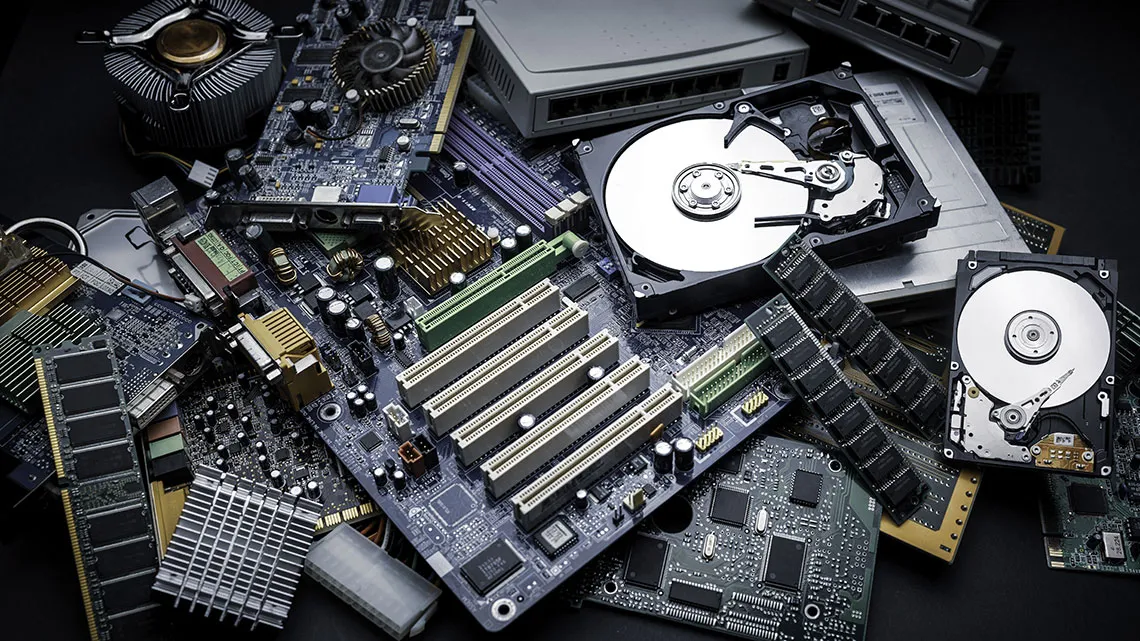
REcapture recovers neodymium, dysprosium, praseodymium and terbium from retired hard drives, motors and other magnet-bearing assets, refining them into high-purity oxides that re-enter domestic manufacturing.
The primary magnet element in motors, drives and wind turbines.
Improves magnet performance at high temperature, critical for defense and EV motors.
Typically recovered alongside neodymium; strengthens the same magnet alloys.
Scarcest of the four, used where magnets must hold performance under heat.
It takes about 1.5 million hard drives to recover one ton of rare earths.
That volume only exists at hyperscale. Hyperscalers, large enterprises refreshing thousands of drives at once, and government fleets are the only customers who generate feedstock at the scale this recovery model requires.

The #1 wind turbine recycler in North America.
A retired turbine comes down in pieces too large to move whole: nacelle, blades, and a generator carrying the same neodymium magnets found in a hard drive, just measured in kilograms instead of grams. Where a data center gives up rare earths one drive at a time, a single wind farm gives them up by the ton.
That generator runs through the same REcapture pathway as every other magnet-bearing asset in the system.
If your fleet is generating retired hard drives, motors or turbines at scale, that volume has a recovery value. Let's model it.
Talk to an expert