
NdFeB magnets
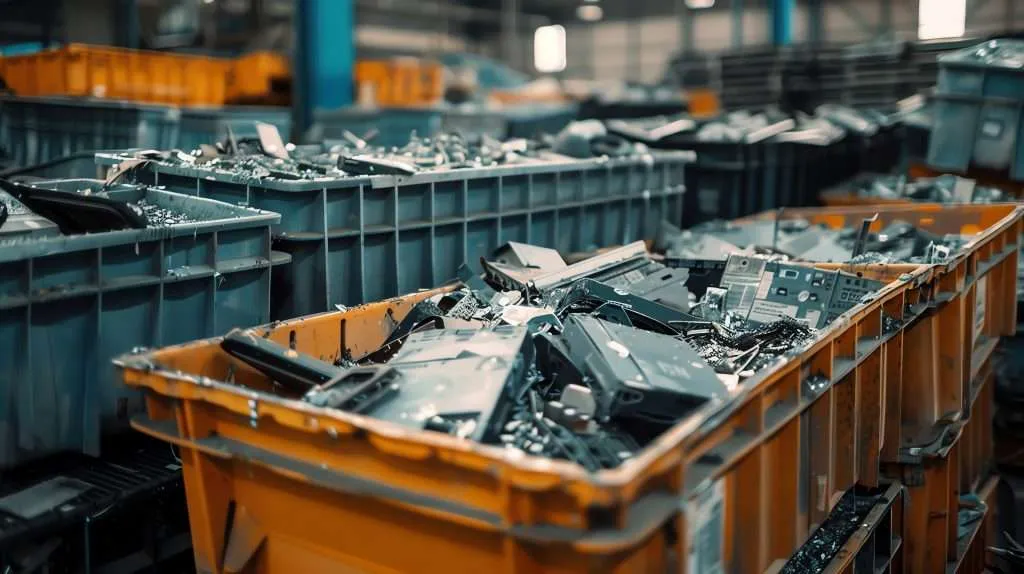
Neodymium-iron-boron magnets recovered from drives, motors and generators.
Critical materials & defense · Strategic partners
Paladin collects and destroys at scale. Turning what comes out of that into usable material takes a different discipline, which is why the recovery side runs through partners who do nothing else.
Critical Materials Recycling
CMR recovers rare earth elements from end-of-life electronics and magnet production waste using a proprietary process called Acid-Free Dissolution Recycling, licensed worldwide and exclusively from the Iowa State University Research Foundation.
Collection
Material comes from electronics recyclers, manufacturers and industrial partners: end-of-life electronics and magnet manufacturing by-products.
Processing
Conventional recovery relies on aggressive acids or high-temperature metallurgy. ADR separates rare earths from magnet material without either, which is what lowers the environmental cost of the recovery.
Recovery
Recovered elements are refined into high-purity oxides, metals and intermediates that go directly into industrial supply chains.
What CMR processes
The inputs are the things a disposition programme already produces, which is what makes the partnership work in both directions.
The output of destruction at volume, and the feedstock Paladin generates most of.
Neodymium-iron-boron magnets recovered from drives, motors and generators.
A second magnet chemistry, common in higher-temperature and defense applications.
Swarf and slag from magnet production, recovered before it ever becomes waste.
Daeheung M&T
REcapture's technology partner in South Korea. Daeheung runs three plants in Gyeonggi-do and a fourth in Hanoi, recovering valuable metals from waste streams that most processors send on rather than open up.
Printed circuit boards, flexible boards, electronic components, semiconductors and wafers, recovered from manufacturing waste.
Cable, mill berry and lead frame, refined to raise purity rather than simply sorted and sold on.
Precious metals pulled out of PCB plating and semiconductor cleaning solutions, by electrolysis and ion exchange resin adsorption.
Petrochemical and automotive catalysts, and end-of-life electric vehicle batteries, with cathode material separated for recovery.
What comes out
Daeheung's output is finished product rather than intermediate material, verified in its own laboratory.
Finished product rather than intermediate material, assayed before it leaves.
Recovered electrolytically at the Hwaseong plant.
Pre-treated and recovered from catalysts and fuel cells.
A fire assay sample room and wet lab at the R&D centre, so the assay is not taken on trust from somebody else.
Start here
The partnership runs both ways. If you generate drives, magnets or magnet scrap at volume, or you need recycled rare-earth material, there is a route through it.